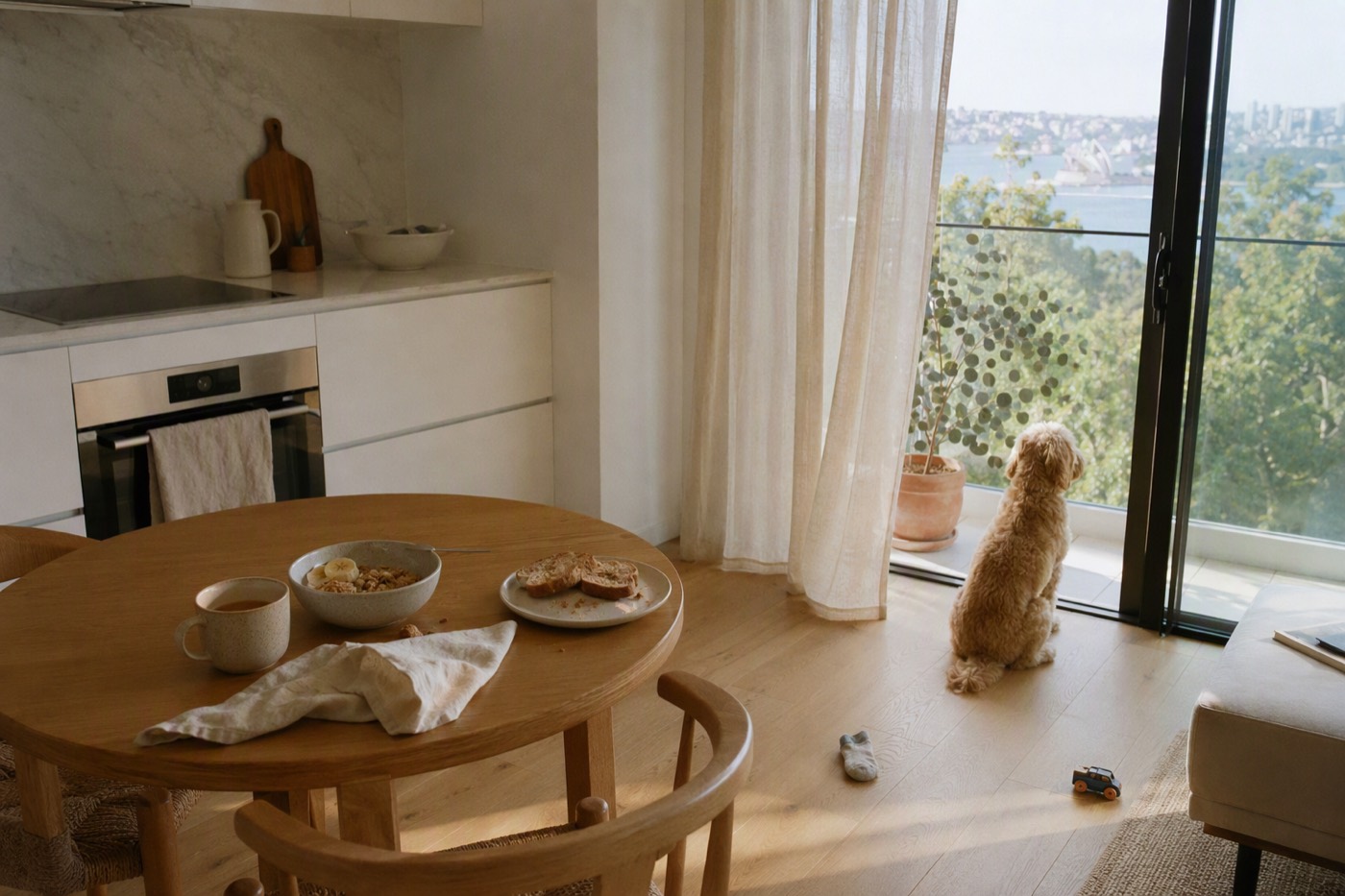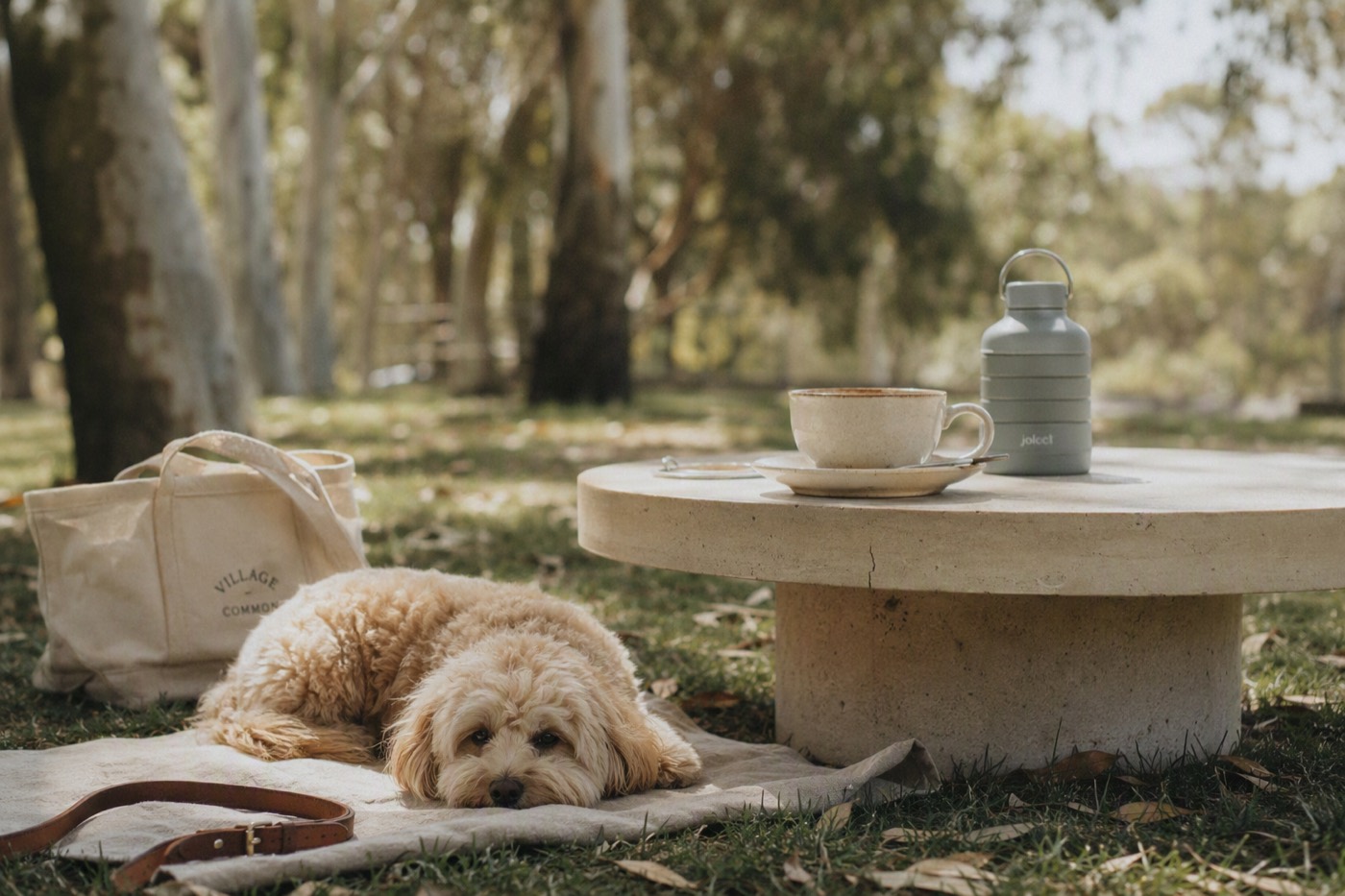
Some of our favourite days out with our dog aren’t particularly exciting.
There isn’t always a long walk, a packed itinerary or somewhere new to discover. Sometimes there’s just a quiet park, a little sniffing, a coffee, some sunshine and a sleepy dog on the way home.
And honestly, those can be the best days.
Taking a dog out isn’t always about finding somewhere spectacular. Sometimes it’s about finding somewhere they can simply be a dog.
Start with your dog, not the destination
We used to plan days around places. What’s the most dog-friendly spot in town? Which cafe has the best patio? Is that beach worth the drive?
Now we start somewhere quieter: what kind of outing would our dog actually enjoy?
It turns out to be a much better question, because not every dog wants the same day.
Some dogs light up for
- Busy cafes and patios
- Meeting every dog on the walk
- A new place every weekend
- Long, varied routes
Others are happiest with
- Quiet, familiar parks
- The same short loop
- Sniffing at their own pace
- Sitting peacefully beside you
Neither dog is doing it wrong. They just want different things from a day out.
So before choosing a destination, honestly picture how your dog handles it. The confident socialite gets bored at a quiet paddock. The sensitive one shuts down at the beach car park. The right place is simply the one your dog can actually relax in.
Choose one main activity
A good day out usually has one anchor. One thing everything else is built around — and the rest is just padding.
One anchor is enough
-
Morning
A short walk, plenty of sniffing
-
Late morning
A dog-friendly cafe
-
Afterwards
A quiet park, or home and rest
Not this
- Dog park
- Beach
- Cafe
- Shopping
- Another walk
- Dinner out
We learned that the hard way, in car parks.
Let your dog sniff
This is the part most “top dog-friendly spots” lists never mention, because it doesn’t photograph well: a walk doesn’t have to be about distance.
There’s a difference between walking the dog and letting the dog experience the walk. One is transport — getting from the car to the park to the cafe on a schedule. The other is standing still for four minutes while your dog reads an entire fence line like a newspaper, then letting them move on when they’re finished.
Sniffing seems to tire a dog in a way walking alone doesn’t. Ten unhurried minutes of investigating a patch of grass can leave them calmer than a brisk kilometre on the same path. And it costs you nothing but a little time — which, if you’ve planned only one activity, is exactly the time you have.
Find the right kind of dog-friendly place
“Dog-friendly” is a wide spectrum. A place can allow dogs technically and still be a miserable hour for yours. Before committing to somewhere, it helps to run through a quick check:
Before you choose somewhere
- Is there outdoor seating, or are dogs parked outside alone?
- Is there shade where you will actually sit?
- Is water available for dogs — a bowl, a fountain, a shop that will fill one?
- Is there somewhere your dog can settle under the table rather than stand the whole time?
- Is it close to a quiet walking area, so the day is not entirely car park and footpath?
- Is it likely to be rammed at the time you are going?
- Are dogs genuinely welcome, or merely tolerated?
- Are there restrictions — fenced-off lawns, no dogs past this point, no dogs on the beach in summer?
- Is there somewhere nearby to rest or retreat afterwards?
Don’t underestimate a quiet park
Your dog doesn’t know you drove forty minutes to reach the best-rated dog beach in the state. They don’t know it’s worth the drive. They can’t tell it apart from the little park near home with the big tree and the interesting fence.
What they register is much simpler: you’re here, you’re not rushing, the smells are good, the light is warm, there’s grass under the blanket and nobody needs anything from them for an hour.
That’s the whole experience, from their side. A quiet park you can reach in five minutes is not a lesser version of an adventure. For a lot of dogs — and a lot of tired parents — it’s the better one.
Pack a little dog-day bag
Nothing ruins a calm outing faster than rummaging. We keep one small bag by the door, with the same few things every time:
The same bag, every time
- Water + bowl
- Treats
- Poop bags
- Lead (and a spare)
- Small towel
- Favourite toy
- Blanket or mat
- Dog-safe sunscreen
- Any medication
Keep it by the door. It does not need to be a system and it does not need to grow — the point is the bag exists, everyone knows where it is, and the day never starts with a search.
Watch for signs your dog has had enough
The end of a good day out is rarely dramatic. It’s usually quiet, and easy to miss if you’re busy with a coffee and a child. Things we’ve learned to notice:
- Repeatedly drifting away from the group, or trying to leave
- Panting that doesn’t match the exercise or the heat
- Difficulty settling — getting up, moving, getting up again
- Unusual restlessness, or the opposite: going very still
- Avoiding dogs or people they’d normally greet
- Repeatedly checking in with you, physically leaning in
None of these mean anything is wrong. They mean the day is finished.
And the important part: leaving early isn’t a failed day out. It’s the skill that makes all the other good days possible. You can always come back. Pushing past the signs is how a lovely morning becomes a stressful drive home.
Build in a rest
This is where “calm” actually comes from — not the location, but the gap you leave in the middle.
After the walk, find somewhere shady. Put the little blanket down. Give your dog water. Then just sit. Let them lie beside you with their chin on the grass, watching absolutely nothing.
You don’t need to entertain your dog the way you don’t need to entertain a child at home. Rest is part of the outing, not the failure of it. And if we’re honest, most of us adults could take note: a day with a proper pause in it feels different on the way home.
Taking the dog out with a little one
Because this is a family site, and the dog rarely goes out alone. When it’s a dog-plus-toddler day, the day works best when nobody is expected to perform:
- Choose pram-friendly paths, so one set of hands isn’t carrying everything
- Avoid the most crowded places and times — small humans and big dogs both cope better with space
- Bring snacks and water for everyone, not just the dog
- Don’t expect the dog and child to interact constantly; parallel existence is a fine activity
- Give both of them their own space — the dog’s blanket is not a carpet for the toddler, and vice versa
- Keep the plan flexible enough to abandon at any point
The goal isn’t managing a child and a dog through an itinerary. It’s a day where everyone gets to enjoy themselves in their own way, side by side.
The 30-minute dog day
Sometimes there is no big adventure. No time, no energy, no spare morning. So we have a fallback, and it’s earned its place:
The minimum viable outing
30 minutes
- Go somewhere nearby 5 min
- Let them sniff, unhurried 10 min
- Find somewhere quiet to sit 5 min
- Have a coffee 5 min
- Go home 5 min
Twenty minutes of sniffy walking and a calm sit-down beats a half-day that exhausted everyone. On a low-energy week, a small day out that actually happens is worth infinitely more than a big one that stays on the list.
A few days that work
For shape, here are the outings we return to. None of them are destinations so much as recipes:
The quiet morning
- Local park, long sniff
- Coffee
- Home before the day fills up
The beach day
- Early walk while it is cool
- Quiet stretch of sand
- Shade and rest
- Home before the crowds
The cafe day
- Short walk first, dog settled
- Dog-friendly cafe with grass nearby
- Gentle people-watching
- Home
The family day
- Park
- Picnic on a blanket
- A gentle walk together
- Everyone naps, dog included
The rainy day
- A short, brisk walk in the wet
- Towel off dramatically
- Indoor sniffing games
- A tired dog by lunchtime
Notice what they all have in common: one main thing, a rest, and an ending that leaves something in the tank.
Coming home happy
Maybe the best dog-friendly day out isn’t the one where we see the most, walk the furthest, or tick the most things off our list.
Maybe it’s the one where everyone comes home happy.
A little tired. A little sun-kissed. Your dog’s paws are dirty. Someone has fallen asleep in the car.
And for a few hours, nobody needed to be anywhere else.
Sometimes, that’s a pretty good day.